


If you’ve ever spent your morning commute daydreaming about starting afresh with your career, this feature is for you. Each Monday, we speak to someone from a different profession to discover what it’s really like. This week we chat Jo Radford, the sommelier at Michelin-starred restaurant Timberyard in Edinburgh.
Salary will vary… Depending on the level of the wine professional, maybe somewhere around £30,000-£50,000. I know that in London this can easily rise up to £66,000 before share of tronc [tips and service charge] and bonuses, etc.
There is definitely an issue in the industry that lots of people face with substance abuse or looking to drink to numb pain… and avoid dealing with other parts of life. That was the case for me at least. I’ve been working in wine for 15 years now but I’ve been sober for over six years. I talk very liberally about it with people who have asked. It’s important to break the stigma around alcohol in the drinks business.
Follow the latest consumer news here
Hospitality is finally catching up with other industries in terms of work-life balance… Previously, people working in restaurants and bars were working more hours, longer days and more days of the week. In the last five years there has been a shift back to work-life balance. The vast majority of sommeliers are wine professionals in the 40-45 hour bracket, which is fairly standard.
I now work as a sober sommelier… and am still able to build out wine lists without drinking the wines themselves. There are other sober sommeliers in this country and around the world, but not many people know about them, and there is still a misconception that you can’t do this job unless you drink. Lots of people are also struggling with alcohol abuse and don’t feel like they’re in a position to talk about it, so hopefully sharing my story can help change that. So now, I taste and spit, and I’m fairly certain my palate has never been sharper.
Feeling the way the slopes align… when the sun comes up in the morning, or seeing first-hand the influence of the mountains on the vines – that all deepens your understanding of a region and the wine it produces. You can’t get a proper gauge on these things until you’ve visited the vineyard or the cellar, or listened to the winemaker tell the story of the vineyard and talk about their craft.
A wine region/country that is underrated and not spoken about enough is… probably Georgia. I was very fortunate to travel there last May, and it was a big eye-opener of a trip, not just because of the wine culture there but because it was the birthplace of wine, with records dating back thousands and thousands of years. The wines there are so unique and offer a snapshot into times past. It was a war-torn country right on the cross-section of Europe, so you have influences from the war, the spice routes, etc.
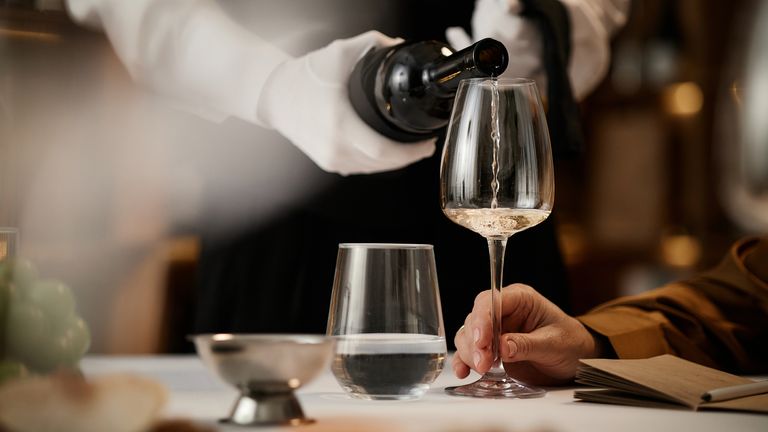
Pic: iStock
One tip for pairing wine with food is… look at what’s near and dear from a wine perspective. By this, I mean marry the food with wines from that region. By and large, wherever the dish originated from, or the ingredients are predominantly from, is a good place to start in terms of looking for a wine to pair.
By and large, the more you’re willing to spend, the better value the bottle you usually get… Margins are tapered, so those near the very south of the list (more commonly recognised) have the biggest markup. It all depends on the volume of the bottles being ordered – whether affordable or crowd pleasing – these wines have higher margins. The ones with lower margins tend to be slow movers on wine lists. There’s an economy that comes into play and so there’s more opportunity for getting better value the more money you spend.
There are mark-ups on wines in restaurants… but it’s all the other overheads you need to take into consideration that a supermarket doesn’t have to take care of. The purchasing of the wine is the same, but on top of that, restaurants have to factor in storage, sorting the wines, printing wine lists, holding back bottles to age, the cost of service, cleaning of glasses, etc. Then you’ve got to consider how the wines are presented, the rent of the space, heating, lighting and the curation of an atmosphere. In the last few years, restaurateurs have responded to customers with breakdowns of costs, so you can actually see what they’re making in terms of profit (which often is very little).
Three tips for navigating the wine list…
1) Engage with the staff and ask for guidance;
2) Have a rough indication of budget in mind;
3) Don’t be scared of the unknown – this allows you to find more interesting options that are potentially better value too.
With tricky customers, I… kill them with kindness. But also try to meet them on their level. Certain people have certain likes and dislikes; it’s important to understand what these are and find something that fits.
The most classic fault to look for when identifying an off wine is… cork taint, and it’s usually fairly obvious from a damp, wet, cardboard aroma. I always trust my first instinct; it’s the easiest way to tell if a wine is good to drink. If it doesn’t feel right to you from the start, then it’s probably not.
When you’re asked to taste the wine… it’s to see whether it’s faulty, not whether you like it. Some restaurants can be a bit funny about guests returning wine that isn’t faulty, but because they don’t like it. But the money hasn’t just gone to waste if the bottle is returned from the table, sometimes we take a bottle back and work it into a wine pairing or use it for training the team. We usually try to cover the costs of the bottle with sales by the glass and move on.
Read more from Money:
How to pick out a good steak – as one supermarket’s range gets shoutout from top chef
There are more railcards than you think – here’s how you can benefit
Could KFC be dethroned? Rivals circle as chicken shops boom in UK
The biggest mistake people make when trying wine is… they try to think about too many things at once, but if they like the wine and it makes them feel good, then it’s the right wine for them. It’s a learning we’ve borrowed from the whisky industry – lots of people get quite stubborn about the way people should be drinking things, very prescriptive with lots of rules. But at the end of the day, if you want your white wine with ice in it and will enjoy it more that way, then that’s fine.
You can get very simple hand pumps that help keep opened bottles fresh… and tightly sealing cork stoppers too. You can seal the wine with the latter, and it gives length and longevity to the freshness. You can get more expensive versions of the hand pumps that are electric, but a hand pump has a big impact, and some of them are as little as £15.
The hardest part of the job that diners never see… is all the back-of-house bits. Service is the glamorous bit, but in terms of organisation, we have to think about things like cellar or storage space, keeping wine lists up to date, co-ordinating deliveries, checking vintages are right, checking the right bottles have been dropped off, categorising them correctly and making sure they’re stored correctly. There’s a lot to juggle.
In the supermarket… try to search for the humble Vin de France, Vino Bianco/Rosso. These wines may not come with a storied appellation written on the label, but you can often find exceptional value for money from emerging regions and producers who are eschewing the need for an appellation-stamp-of-approval.
The only thing that is a little intimidating is… the idea that wine knowledge is a never ending pursuit. No one can ever really conquer the craft of wine in this industry. Just when you think you’re getting close, there are new vintages to get your head around, new producers to meet, new climatic changes to consider. It feels a little relentless but it’s good fun.