

Israel says it will allow in only 10,000 Palestinians from the occupied West Bank, a fraction of the worshipers in previous years
Published On 20 Feb 2026
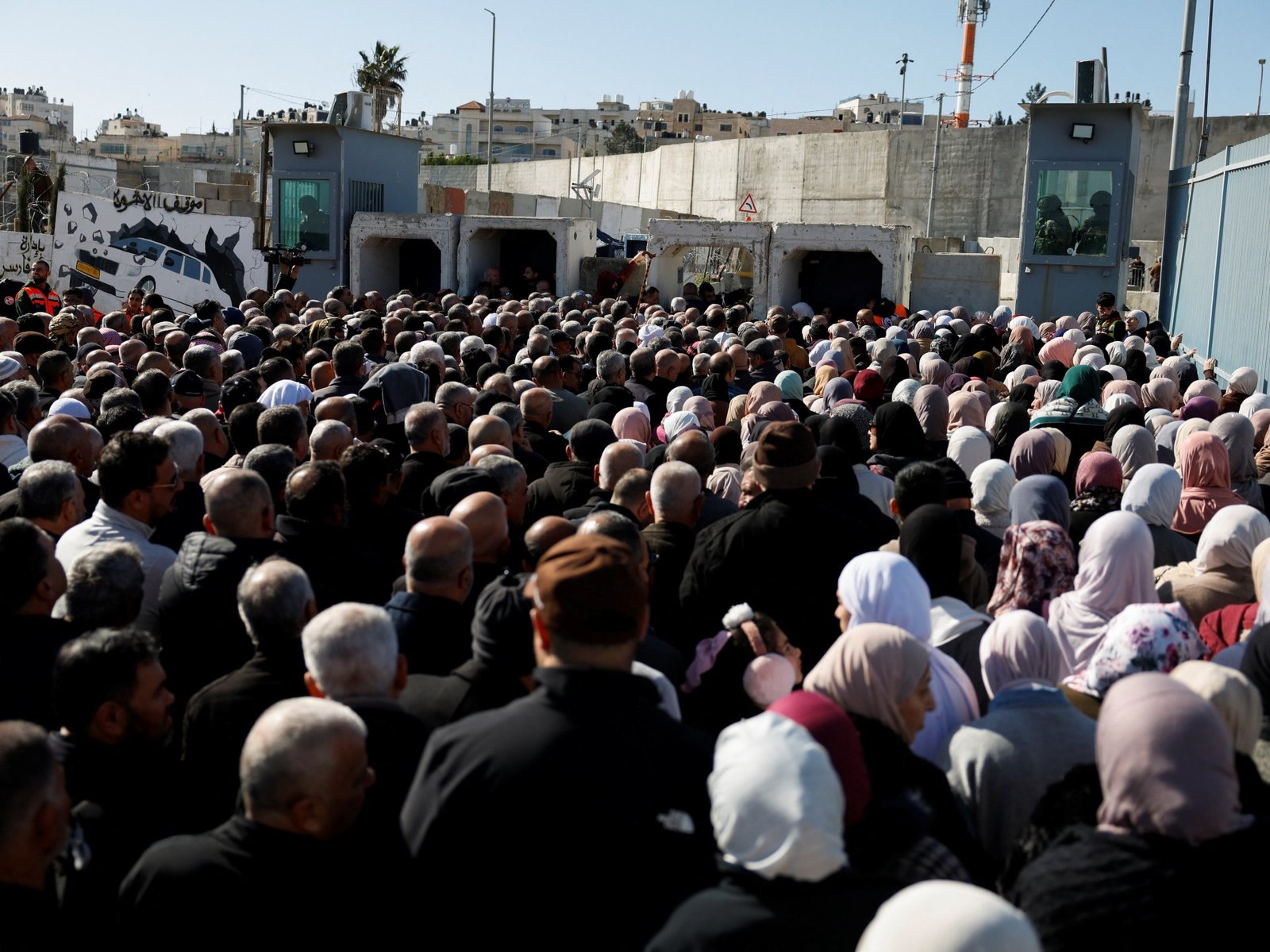
Israel is severely restricting Palestinians’ access to the Al-Aqsa Mosque compound in occupied East Jerusalem for the first Friday prayers of Ramadan, with many hundreds queueing at the Qalandiya checkpoint near Ramallah hoping and waiting to get in.
But Israeli authorities say they will allow no more than 10,000 Palestinians from the occupied West Bank into one of Islam’s holiest sites for the day, and only with permits, a fraction of the worshipers who have visited to mark the occasion in previous years.
Recommended Stories
list of 3 itemsend of list
Only children under the age of 12, men over 55, and women 50 years or older are eligible.
Israeli Channel 12 reported that only about 2,000 Palestinians were able to cross through the Qalandiya checkpoint towards Jerusalem by the morning hours, amid a state of Israeli military high alert at the checkpoints separating the West Bank and the city.

‘Getting to Al-Aqsa Masque compound is part of Palestinian tradition’
“There are 3.3 million people in the occupied West Bank… so allowing only 10,000 to pray on this first Friday or Ramadan is a drop in the ocean, and only a trickle have been able to make it in,” Al Jazeera’s Nour Odeh reported from the Qalandiya checkpoint.
“In previous years, we’ve seen up to 250,000 worshipers in that holly site, and now only a fraction of that is expected. And it will be from the occupied West Bank, from occupied East Jerusalem itself and Palestinian-Israeli citizens from inside Israel proper.”
In the meantime, she added, “hundreds of people are still stuck at the checkpoint trying to get inside, trying to make it to the holy mosque but are being barred.”
Odeh said the new restrictions are serving to break the bonds between communities.
“Getting to the Al-Aqsa Masque compound is part of the Palestinian tradition, which has been going on for generations, for hundreds of years. Spending the day there is extremely important; it’s part of the heritage of Palestinians,” she said.
But this year, she added, many “will not be allowed to break their fast in Jerusalem as they’re used to, and that is just one more way that Israel is severing ties between occupied East Jerusalem and the rest of the occupied West Bank.”
